Guardrails for AI
This is what I believe separates an AI system worth using from one that will cause trouble.
This is what I believe separates an AI system worth using from one that will cause trouble.
What guardrails are
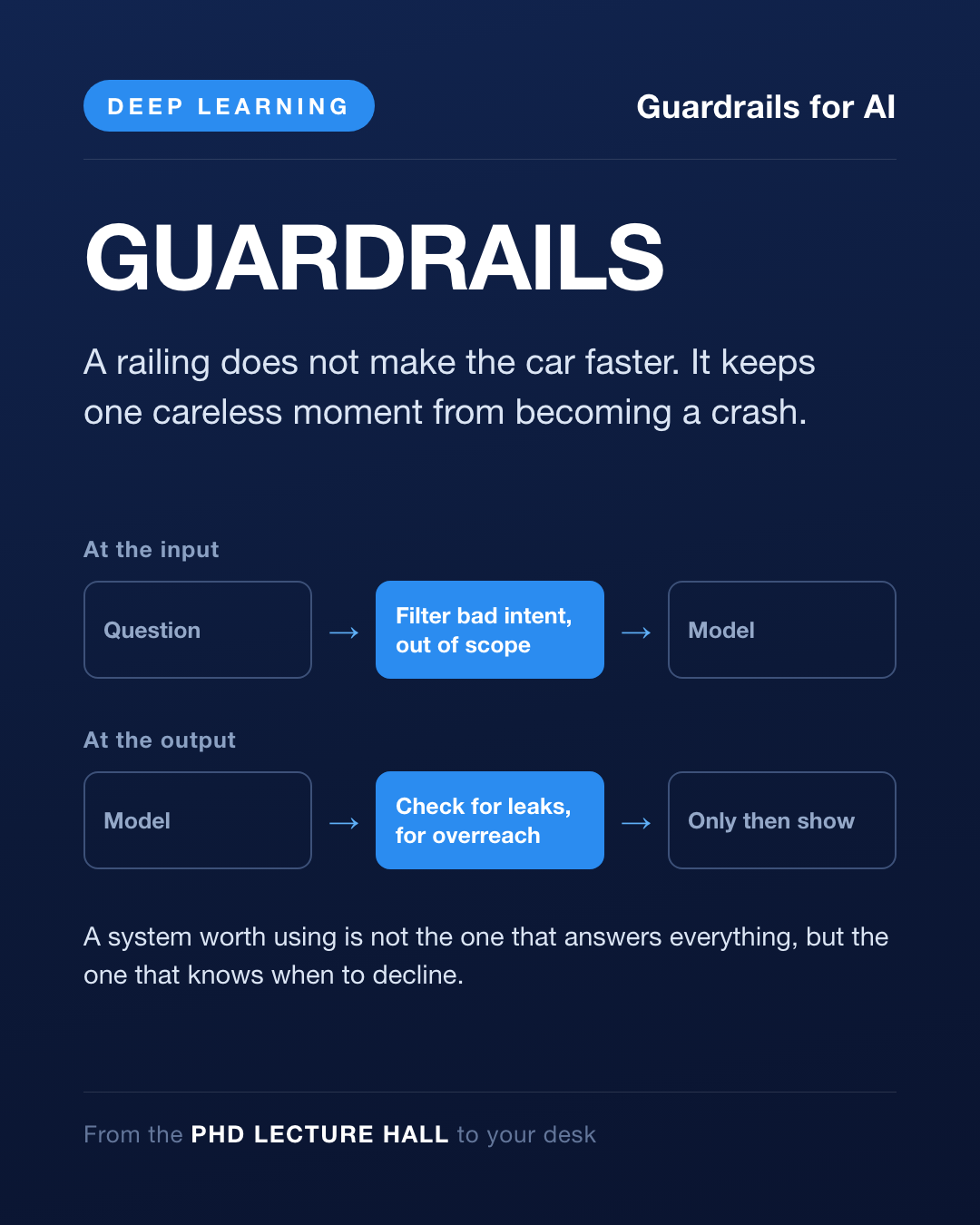
Picture a mountain road. What keeps the car safe is not only a skilled driver but the railings on both sides, holding the car back from the drop even when a hand slips. Guardrails in AI are the rules placed at both ends: filtering the input to block requests that are not permitted, and reviewing the output to block answers that should not be given, even when the model has drifted.
The direction matters enough that the large firms build dedicated tools for it. In April 2023 NVIDIA released NeMo Guardrails, an open source toolkit that lets input and output rails be programmed in a few lines of declaration rather than by rewriting the core of the model.
How this applies to running a business
I find an AI system worth using is not one that can answer everything, but one that knows when to decline. A customer service assistant willing to promise things the company cannot deliver, or liable to disclose internal information, is more dangerous than it is useful.
Rails are not only for AI either. Every arrangement that delegates authority, to a person or to a tool, should have a clear boundary: what is permitted, what is absolutely not, and who to hand to when a situation falls outside. Designing the rails first is what lets you automate boldly and still sleep.
If your AI assistant met a request outside the safe zone, would it answer anyway or know to stop and hand over to a person?