Technically right still needs users
A model can be 95% right on day one, but if nobody opens it, that figure produces no value at all.
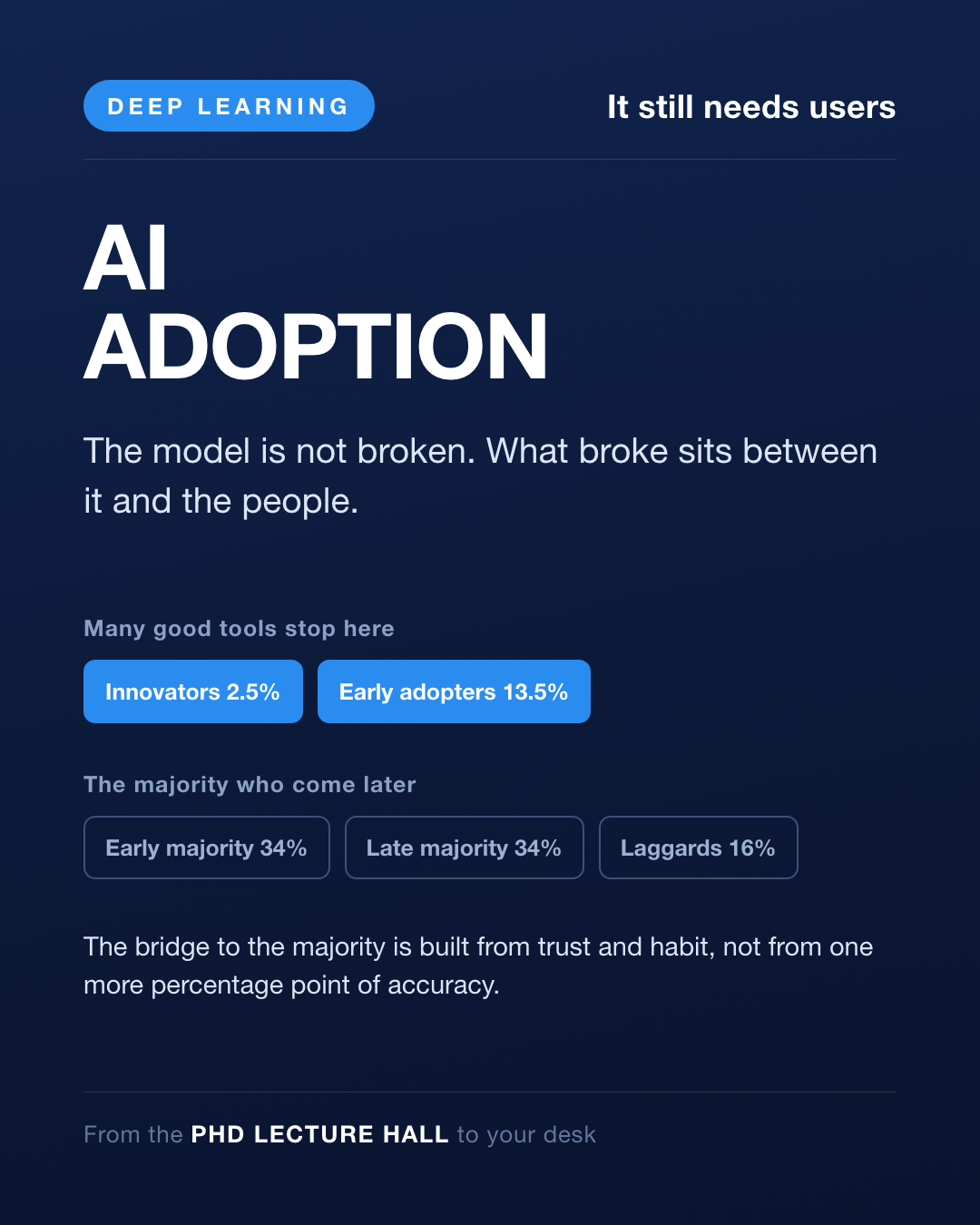
This is what I say to people bringing AI into their operations: a model can be 95% right on day one, but if nobody opens it, that figure produces no value at all.
What adoption is
The field calls the gap between running in the test room and being trusted by real people adoption. This, rather than accuracy, is where most AI projects stop.
In 1962 the sociologist Everett Rogers described how an innovation spreads through a community, in his theory of diffusion of innovations. He found that people accept something new in groups rather than all at once: the innovators are only around 2.5%, early adopters 13.5%, then two large groups of 34% each, and finally the laggards at 16%. What is worth remembering is that a good tool still stalls in that first small group if it cannot build a bridge to the majority who come after. And that bridge is made of trust and habit, of the feeling that this thing is mine, not of one more percentage point of accuracy.
How this applies to running a business
I see many businesses measure an AI project only by the accuracy of the model, then feel surprised when three months later almost nobody uses it. The model is not broken. What was never designed is the path for people to accept it.
Rogers' lesson is very down to earth: do not wait until delivery to start thinking about the users. Invite the people who will use it in from the moment you choose the problem, let them handle a rough version, then shape the tool around how they actually work. A few early adopters who come to trust it and tell their colleagues usually spread it further than any compulsory training session.
A perfect system that nobody sees themselves in is still a system that is not running.
In your team, which tool is technically right and still short of users, and who should have been invited in earlier?