It reads what you do
You have probably felt this: a few minutes into TikTok or Netflix and it has already read you, serving exactly what you wanted, though you never said so.
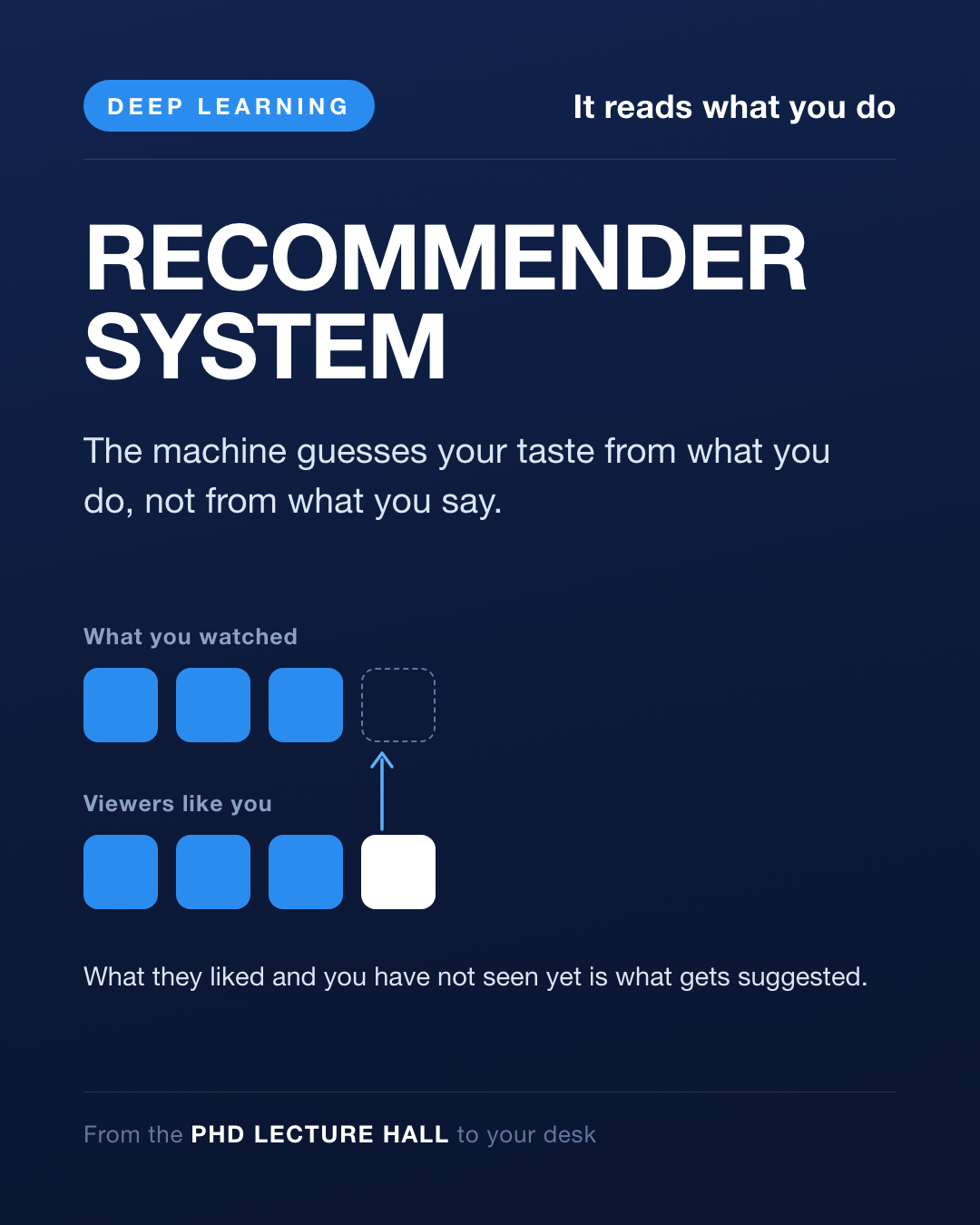
You have probably had this feeling: a few minutes into TikTok or Netflix and it has already read you, serving up exactly the thing you wanted to watch, though you never said so. That sense of being understood is not luck. It is the product of a class of AI called the recommender system.
Its secret is learning from behaviour rather than from words. Where you paused, whether you watched to the end or swiped past, what hour you engage at: each action is a scrap of signal. Gather millions of such scraps and the system gradually works out that people whose viewing habits closely resemble yours tend to like the same things, so it suggests those things to you. It does not “understand” you the way a person would, but it is very good at finding resemblances the eye would struggle to see.
The weight of this mechanism is far greater than people assume. Around 80% of what people watch on Netflix comes from the system's suggestions rather than from users going to look for something; on YouTube the estimate is around 70%.
What I want to think about is the business side. Tailoring to each customer's taste is no longer the privilege of a few technology giants. A small shop today can suggest the right product to the right person based on what the customer actually did, rather than on the owner's guess.
How tailored is the experience you are giving customers, and is it built on real data or on instinct?
To your desk
A strong recommender is not strong through guesswork. It is strong through watching real behaviour: what a customer looks at, buys, and when they come back.
This week, try something small in that spirit. Take ten recent customers and look back at what they actually did, the products they keep viewing, the questions they keep repeating, rather than at the customer portrait you drew in your head. Very often the real data tells a different story from our assumption.
Tailoring an experience does not begin with technology. It begins with the habit of watching a small group closely.