A one-page AI opportunity brief
Before starting an AI project, write down on exactly one page what you want AI to solve.
There is a scene I meet again and again in advisory sessions: an enthusiastic team tells me they tried ChatGPT, built a chatbot, ran it for a few weeks, then quietly stopped because "it was interesting but we did not know what to use it for to get a result". The tool is not at fault. What is missing is a step that looks small and that almost everyone skips: writing down, before starting, what exactly you want AI to solve.
What an AI opportunity brief is
Picture someone preparing to build a house. If the builders are called in before it is decided how many rooms, who will live there and what the budget is, every brick laid risks having to come out again. The careful person sits down, writes one page answering the core questions, and only then breaks ground.
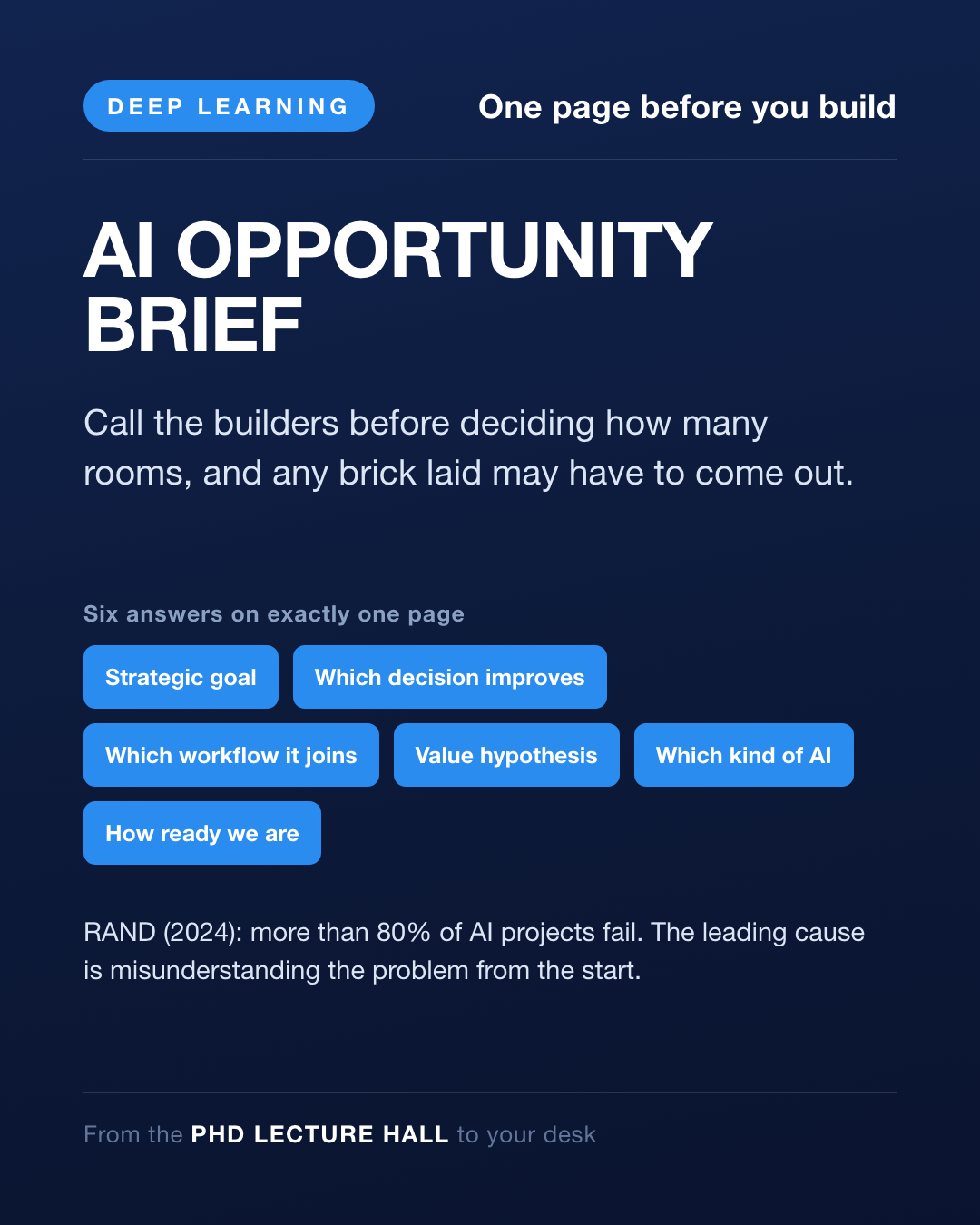
An AI opportunity brief is that page for an AI project. It fits on exactly one page and answers six questions before anyone writes the first line of code: which strategic goal are we serving; which decision will get better because of this project; which running workflow does it attach to; what is the value hypothesis, meaning what changes, by how much and within how long; which kind of AI fits; and how ready the organisation is, in both data and people.
Why is one page worth pausing a whole project for? A 2024 report from RAND Corporation, based on interviews with many technical leaders, found that more than 80% of AI projects fail, nearly twice the rate of ordinary information technology projects. The leading cause is not a weak model or a lack of data. People misunderstand, or miscommunicate, from the very start the problem AI was supposed to solve. The one-page brief exists to block exactly that break.
How this applies to running a business
The real value of this tool is the discipline it forces on us. When a department head proposes "we should do AI for customer care", it sounds reasonable but nothing can be done with it yet. Push it through the one-page brief and the conversation changes at once: is the goal to shorten response time or to take load off the duty team; which specific decision improves; where does it sit in the current request intake workflow; the value hypothesis is to bring average reply time from four hours down to one hour within ninety days; is the old conversation data clean enough to use.
Only after the page is written do I usually see that most AI ideas are either not yet clear enough to do, or not yet mature enough in data to succeed. One page costs far less than six months building something nobody uses. At CoreU I still treat this as the first exercise on the table before any project, not a formality done for show.
Before the next AI project your team plans to start, could the whole group answer those six questions on exactly one page?