Setting the ceiling first
This is a lesson in cost discipline that I see many teams learn a little late.
This is a lesson in cost discipline that I see many teams learn a little late.
What token budgeting is
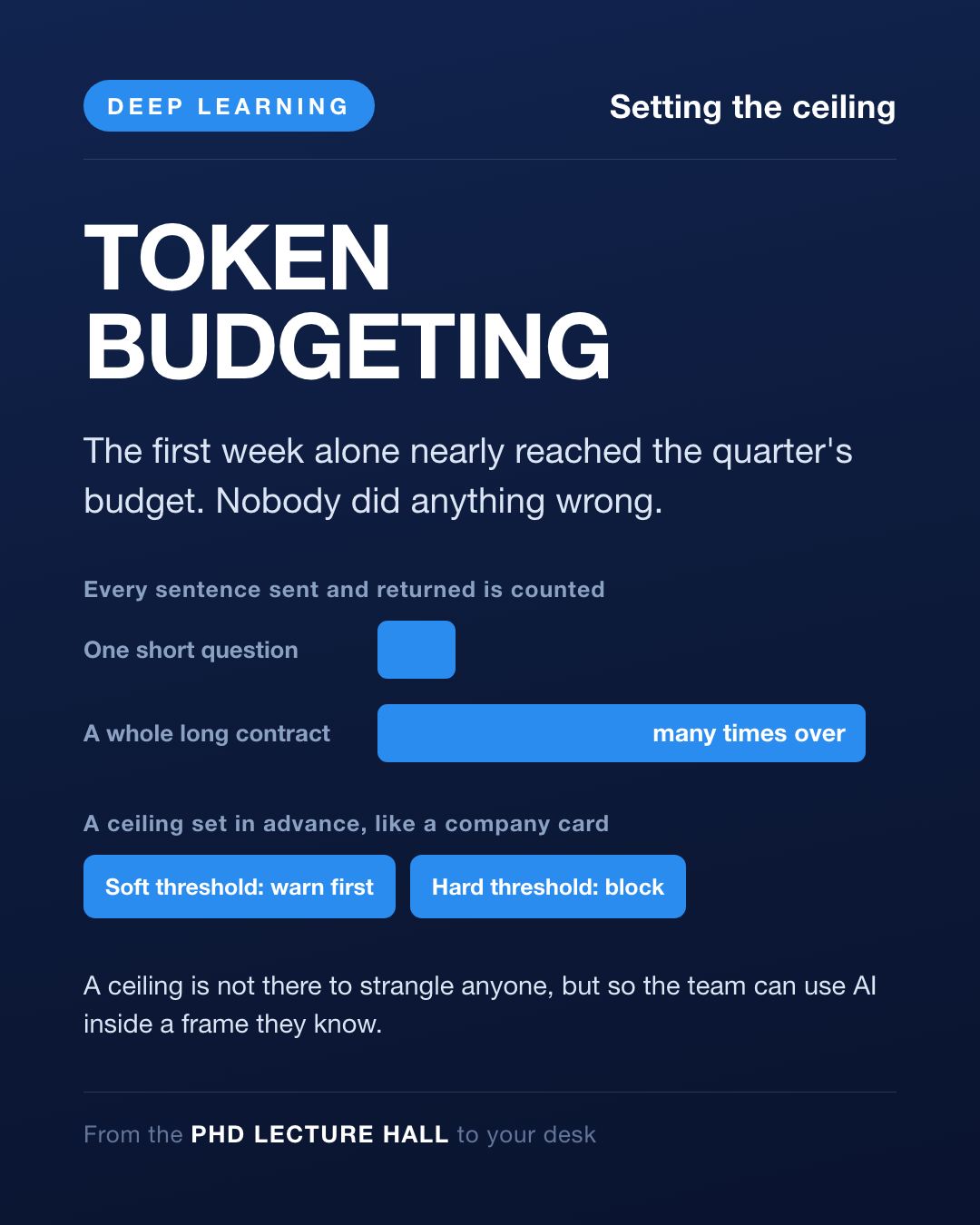
Picture handing an employee a spending card with no limit and nobody watching. Most of the time it will be fine, but one task that loops or misfires is enough to swell the invoice before anyone notices. With AI, each call to the model consumes tokens, the small pieces of text a model reads in and produces, and the cost is counted by those tokens. Token budgeting means setting the budget and the limits on usage in advance.
The mechanism is standard: both OpenAI and Anthropic let you set a spend limit, with a hard threshold that blocks requests once reached and a soft threshold that warns before you get there. That way a technical fault does not turn into a surprise invoice.
How this applies to running a business
I find this is an old financial principle applied to a new technology: set the ceiling before spending, rather than regretting the invoice afterwards. A team can burn a quarter's AI budget in a few days if nobody sets a limit, especially when starting to automate at scale.
More widely, this is a habit worth having for every cost that runs quietly in the background: advertising, pay-as-you-go tools, cloud services. Setting a warning threshold and a hard ceiling in advance is what lets you experiment boldly while keeping the risk in hand.
Do your usage-based costs have a warning threshold and a hard ceiling yet, or are you still waiting for the month-end invoice?