The hype cycle
This is the concept that kept me level-headed while the noise about AI was at its loudest.
This is the concept that kept me level-headed while the noise about AI was at its loudest.
What the hype cycle is
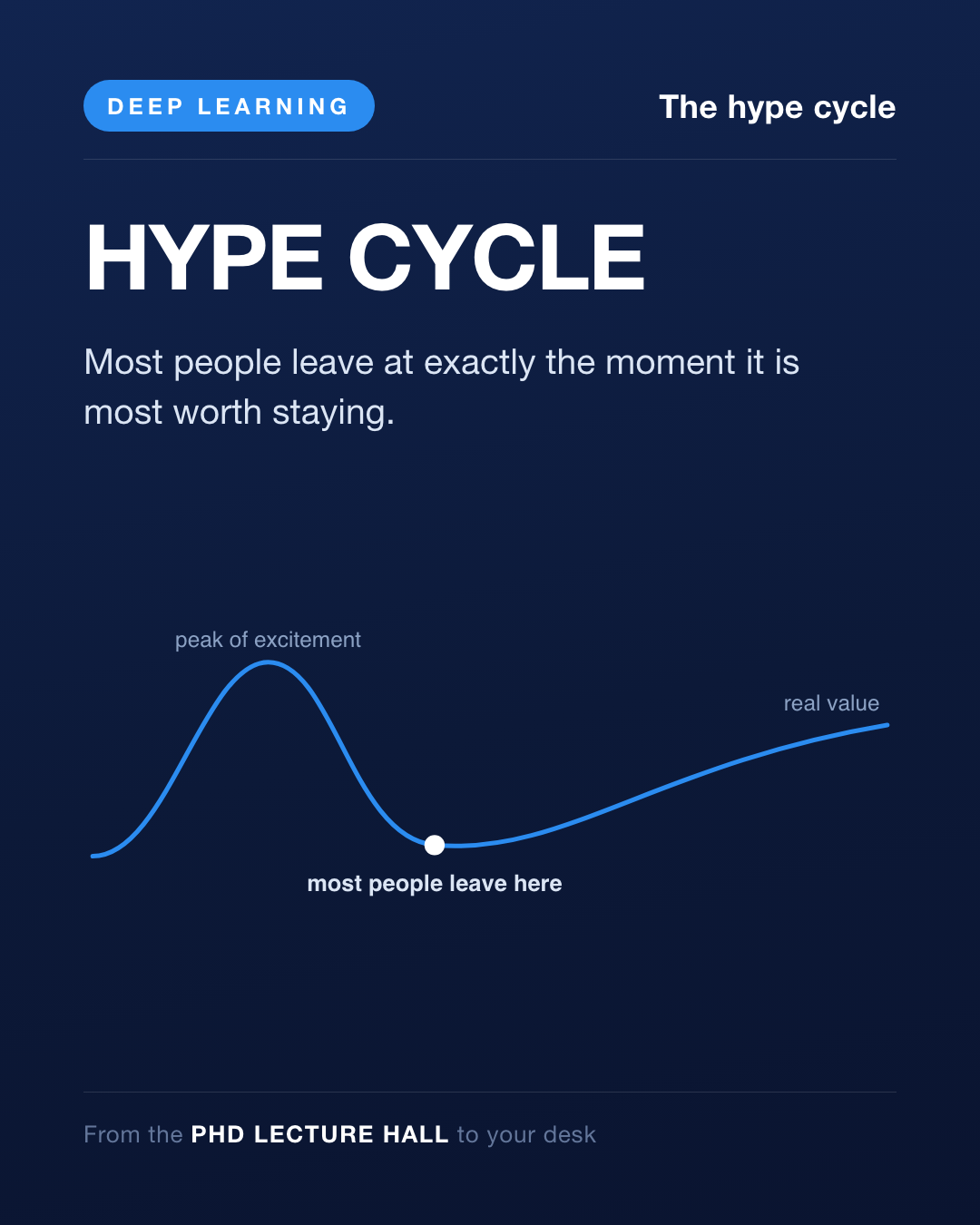
Picture how it feels to start a new exercise regime. The first few days are all excitement, and you are sure you are about to transform entirely. Then comes the tiredness, no visible result yet, and it is easy to quit. Whoever gets past that stage enters a steady rhythm and reaps something real. The hype cycle describes exactly that emotional curve for technology.
The concept was introduced by the research firm Gartner in 1995, with five stages: an innovation trigger, a peak of inflated expectations, a trough of disillusionment, a slope of enlightenment, and finally a plateau of productivity. Almost every major technology travels this curve, AI included.
How this applies to running a business
I see many businesses make decisions at the two most dangerous points on the curve. At the peak of expectations, they pour money in following the trend without a clear problem. In the trough of disillusionment, they give up just as the technology is ripening, only because the first attempt produced nothing.
A clear-headed operator does not ask "is this hot right now" but "which specific problem of mine does this solve, and once the fever passes what value does it still create". A durable strategy means crossing the fever with small, measured trials, rather than jumping in or pulling out with the mood of the crowd.
Where on this curve are you with AI, and is your next decision driven by feeling or by a clear problem?